




















Answer every customer, on every channel, with people in charge of the hard calls.
Voice, chat and co-pilot agents answer routine questions and give operators cited answers. Anything outside the agreed limits goes to a person.
- 01
Voice customer support
Answer routine calls by voice, and hand the hard ones to people.
- 02
Chat customer support
Resolve most conversations in chat, with a clean handover when a person is needed.
- 03
Contact centre co-pilot
Give every operator the right answer while the customer is still on the line.
AI in production, story by story.
Pick one to see the result, the client behind it and the full story.
 Use Case · Voice Customer Support-5kcalls per month expectedNOS expects 5k fewer calls a month with a conversational voice assistantA conversational virtual voice assistant that reduces call volume and improves customer experienceFull success story
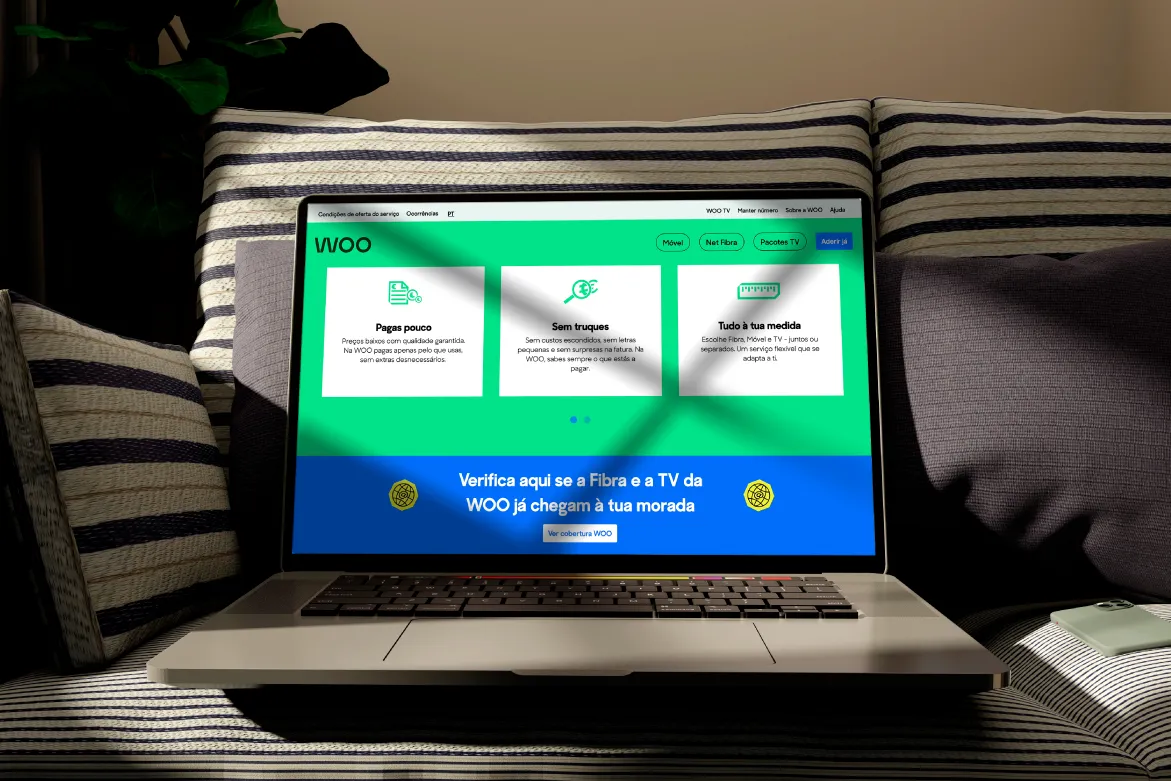 Use Case · Chat Customer Support50kconversations contained monthlyWOO cuts chat handovers from 55% to 29% and saves around €0.96MAn AI chat assistant that reduces call volume, speeds up resolutions, and improves customer experience for WOOFull success story
 Use Case · Contact Centre Co-Pilot10%handling call time reductionNOS cuts call handling time by 10% with UVA, a knowledge assistantFaster, more consistent answers for customer support operators using a single internal knowledge workspaceFull success story -5kcalls per month expected50kconversations contained monthly10%handling call time reduction

Questions
Talk to usWhich channels can a service agent cover?
Voice, chat and internal co-pilots for operators. Our stories include a voice assistant for billing calls, a chat assistant on a brand channel and a co-pilot for contact centre operators.
What happens when the agent cannot help a customer?
It hands the conversation to a person, with the context so far, so the customer never repeats themselves. You set the limits for what the agent may settle on its own.
What happens after go-live?
The team that builds your solution runs it. We monitor quality and adoption, fix what drifts and improve the solution as your business changes.
Where does our data live?
You decide. We deploy in our cloud, in your own cloud account or on your servers, and your data stays inside that perimeter under your rules.
Do we need an AI strategy before we start?
No. If you already have a use case with an owner, workable data and internal agreement, we can build it. If not, the AI Assessment finds and ranks the opportunities first.
Can you work with our own data and IT teams?
Yes. We adapt to your stack and work side by side with your engineers. We can also plan the move from a DareData team to your own team over time.
Which AI models do you use?
We are not tied to one provider. GenOS works with models such as Claude, GPT, Gemini, Mistral and Llama, and we pick per task for accuracy, cost and where the data may go.
Who owns what we build together?
Ownership is agreed in the contract before work starts. Ask us for our standard terms on the first call.
How is a project priced?
It depends on scope, length and the team it needs. After a first conversation we send a proposal fitted to your case, not a price list.
How do you keep our data secure?
Every solution runs on GenOS, with guardrails, access rules and a log of each answer, action and model call. Your security and risk owners review the design before anything goes live.
Other teams







Bring us your hardest AI problem.
Large enterprises trust us to carry AI all the way into production. We shape the use case, build it into your systems and run it with the governance your business needs.
- 01Use cases chosen for value, not hype
- 02Systems built into your stack and data
- 03Run, monitored and improved after go-live