
“If we compare AI with the video game industry, we have just launched Pac-Man”

Ivo Bernardo, co-founder of DareData, discusses the current state of maturity of AI and the trends for 2026, as well as the services most sought after by companies.
The automation of customer service and the optimization of internal processes are the solutions most sought after by the DareData team, a Portuguese company specialized in developing and implementing artificial intelligence (AI). Ivo Bernardo, co-founder, also admits that many clients still wrongly believe that AI can be a solution for everything: “There is this frustration that AI is a solution for everything, therefore it is the hammer that solves every nail, or everything becomes a nail for this hammer.”
In the third episode of the Podcast .IA, ECO’s program that every month analyzes how a sector of the economy is implementing AI technologies, the DareData executive also addresses some of the trends in this field for the coming year of 2026 — namely, but not only, the intersection between physical and virtual AI.
This field still solves everything very much by brute force. Everything is solved like this. Nowadays we are starting to realize that it will not always be solved that way. We are beginning to hear about Small Language Models.
Which solutions are your clients currently looking for the most?
The first has been the customer service area. Essentially, all the processes that are centered on optimizing the response to the customer. I will give two examples. The Helena chatbot [from CTT], which accelerates responses to customers who are looking for information and do not want to wait on a support line or use other channels to obtain that answer, and a project with NOS to help operators obtain information more quickly within the organization. It is about having a copilot — which is not just a simple copilot, as it requires deeper integration with the internal systems of these large companies, which have a lot of complexity and often have difficulty mapping all the documentation they have internally — that helps the people on the front line respond more quickly to what users or customers ask.
The other type of solutions that our clients have been looking for are mostly related to optimizing their own service. Internal processes that need optimization, such as having people consistently responding to the same types of emails. A large part of those processes can be automated.
When companies approach you to implement a specific use case, do they already have an idea of what they want? Or do they often still come with that marketing mindset of “we need something with AI, we just do not know what”?
There are both stages. We have clients who already have some technological maturity and who mostly know where they can apply artificial intelligence. But then we have other clients who come completely sold on the hype around this field, which causes them to lose discernment about where this will actually add value.
I will give an example from a meeting I attended recently, about two or three months ago, where a client told us in a first meeting that they wanted to automate all their customer support because they had seen some incredible demonstrations of AI agents automating all support. My question was: how many calls do you receive per day? And he said “about 20”… In that case, artificial intelligence will probably not solve much here.
Is that where the frustration with return expectations comes from? AI can also be a solution looking for a problem.
Exactly, that is an excellent phrase. There are two forms of frustration. One is the frustration that AI is a solution for everything, therefore it is the hammer that solves every nail, or everything becomes a nail for this hammer. And the second is the frustration of poor implementation by companies that may be working in this area. This naturally happens in a field that currently has enormous hype. Therefore, every company that minimally works with a keyboard and a computer will now say that they do AI.
As a data scientist, I know you closely follow everything that happens in this field. With a new year now beginning, what are the main trends that will shape this field in 2026?
First of all, the quality of artificial intelligence systems. What I mean by quality is that systems increasingly know how to deal with hallucinations, with AI errors and, above all, we see a lot of research around how to make these AI processes as accurate as possible within business solutions. This is because placing AI systems in critical processes is still not obvious for most organizations. When I say critical processes, I mean processes that may create compliance risks, brand risks, or financial risks. Today we still do not have total confidence. It is something we have been working on very successfully. But it is necessary to understand that artificial intelligence will always make mistakes — it is in its nature to make mistakes.
The second trend would be efficiency within this field. This area still solves everything very much by brute force. There is a tendency to simply increase parameters — which are the number of choices and complexity within these models — in brute fashion. Everything gets solved like that. Today we are beginning to realize that it will not always be solved that way. We are starting to hear about Small Language Models.
Context is king…
Context is king. In other words, trying to reduce the complexity of these models so they become more efficient. Reducing these models will also be necessary because, at the moment, the investment from clients in everything related to maintaining these solutions is almost an invisible cost that people are sweeping under the rug, but that we will certainly have to worry about in the future, and that will come through greater efficiency in this technology.
And thirdly, we are seeing a broader movement toward the intersection between the physical world and the world of artificial intelligence.
Humanoid robots?
Yes, and also the construction of the physical world based on artificial intelligence or the construction of simulated worlds based on artificial intelligence. It may sound a bit like science fiction, but we can, for example, think about the creation of CGI (computer-generated imagery) in films, which used to be created through CGI technology and which in the future may be created through artificial intelligence. Therefore, that intersection between the physical world and artificial intelligence.
At the moment we are recording this, investors remain very concerned about the overvaluation of technology companies. If this AI bubble bursts, could we witness another AI winter?
I do not think so. I think it may burst in terms of expectations and the speed of expectations. Financially, I think we are at enormous valuation multiples, although it is very different from the dot-com bubble. When we compare it with the dot-com bubble, there was absolutely no revenue, it was practically zero — it was enough to add “.com” to the name and multiples would expand. Today there is revenue. Part of that revenue is also a bit of everyone spending on each other, but that could be another 20 minutes of conversation. However, I believe that even if a bubble bursts financially and we have a natural correction in financial markets and in unrealistic expectations, there is still a lot to be done in terms of the applicability of artificial intelligence.
We are still in the early stages of applying artificial intelligence. And I would say that right now, if we look at it — for example comparing it with the video game industry — we have just launched Pac-Man.
Related news


Artificial Intelligence Made in Portugal: ‘We grew more than 60% in one of the most competitive markets in the world,’ says DareData Partner.
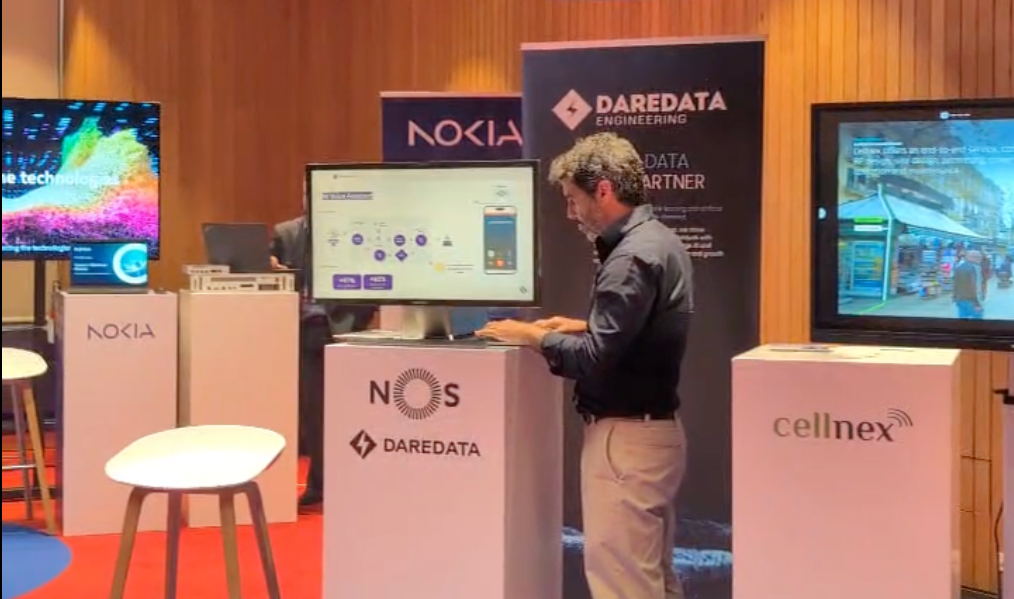
DareData presented Gen‑OS at APDC’s Digital Business Congress 2025
DareData develops AI for NOS department that will automate 80% of processes

Ivo Bernardo discussed Gen-OS and industrial AI adoption on Jornal Económico
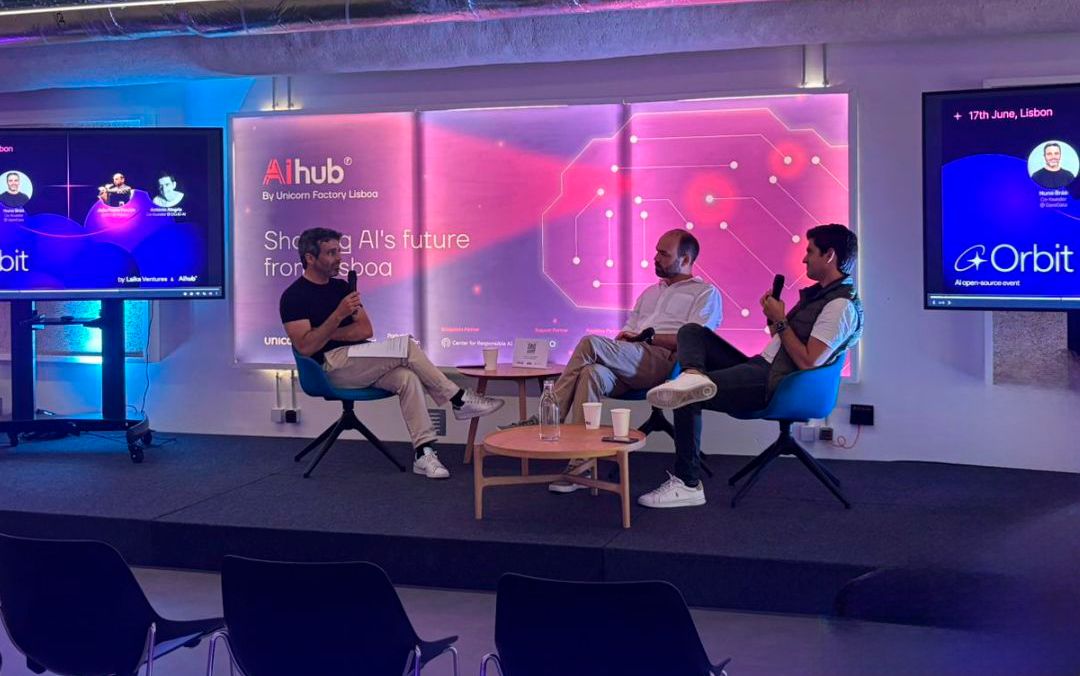
Nuno Brás joined Orbit panel to discuss AI’s impact on brand relevance
DareData joined London Tech Week 2025 to sharpen AI’s enterprise impact
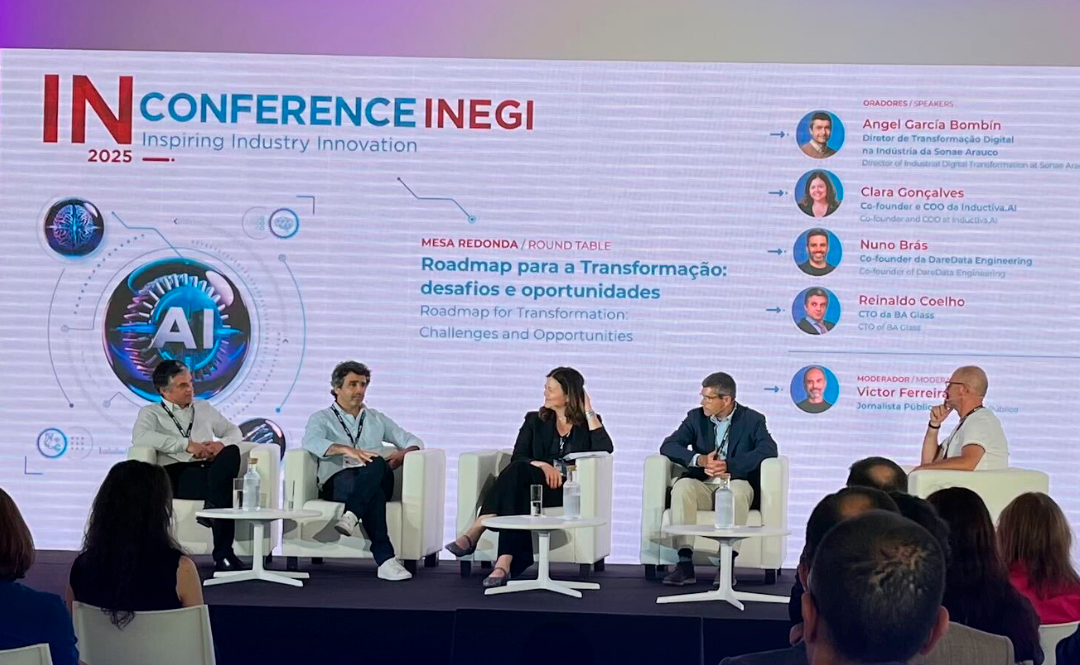
Nuno Brás spoke at INConference 2025 on industrial AI strategy
DareData brought Gen-OS to GITEX EUROPE 2025

Ivo Bernardo spoke at Data with Purpose Summit on impact-driven AI
